Nigeria’s 15% Minimum Effective Tax Rate: What Replaced the Old Minimum Tax?
Published September 21, 2026

Nigeria's 15% Minimum Effective Tax Rate: Scope, Calculation, Incentives, and the Financial-Reporting Judgement Calls It Creates
By Joe Adinma, FCA, FCTI — Managing Partner, Joe Adinma & Co. (Chartered Accountants)
Nigeria's Treasury gave up one minimum tax. It did not give up on minimum taxation. Our earlier piece on the nine ways the Nigeria Tax Act (NTA) 2025 rewrote the rules from January 2026 flagged that minimum tax had been abolished — and for the great majority of Nigerian companies, that remains true and worth celebrating. But it is only half the sentence. Section 57 of the same Act quietly installs a different, narrower minimum tax, aimed squarely at the companies large enough to matter to the Treasury.
This piece is a deep dive into that replacement — the 15% Minimum Effective Tax Rate, which the Act itself calls the “effective tax rate” provision and which professional commentary has shorthanded to “METR.” Throughout, “ETR” refers to the actual ratio a given company computes; “additional tax” is the statute's own term for the top-up, which we also call the top-up tax for readability. We explain who is in scope, how the arithmetic works, where Nigeria's rule diverges from the OECD's Pillar Two architecture, how it interacts with investment incentives, and which accounting conclusions still require a documented judgement call rather than a confident assertion.
A note on our sources and edition |
The Rule That Disappeared
The old minimum tax lived in Section 33 of the Companies Income Tax Act (CITA). Its enduring rate, set by the Finance Act 2019, was 0.5% of gross turnover less franked investment income, charged on any company whose assessable profit was nil, was a loss, or produced tax payable below that floor. The Finance Act 2020 briefly halved this to 0.25% — but only for tax returns prepared and filed for years of assessment falling due between 1 January 2020 and 31 December 2021, a COVID-era concession, not a permanent cut. Small companies with turnover under ₦25 million, businesses in their first four calendar years, and agricultural enterprises were exempt from Section 33; everyone else — including SMEs having a genuinely difficult year — was liable at 0.5% of turnover (0.25% during the relief window).
Insurance companies sat outside this computation entirely, under their own dedicated minimum tax rule in Section 16 of CITA — a separate provision, not a carve-out from Section 33. Both provisions were created together: the Finance Act 2019 inserted the enduring 0.5% rate into Section 16 (new subsection (12): 0.5% of gross premium for non-life insurers, or 0.5% of gross income for life insurers) in the same clause that rewrote Section 33(2) to its own 0.5%-of-turnover formula — with no temporary relief in either provision as originally enacted. The Finance Act 2020 then added the identical COVID-era proviso to both: a reduction to 0.25%, but only for tax returns prepared and filed for years of assessment falling due between 1 January 2020 and 31 December 2021. So the common description — “insurers had their own rules” — is correct; what is usually missed is that the rate pattern was identical to everyone else's from the outset, 0.5% enduring and 0.25% during the COVID relief period, just applied to a different, insurer-specific base (gross premium or gross income) rather than gross turnover.
That provision is gone. From 1 January 2026, the general CITA turnover-based minimum no longer applies merely because an ordinary company reports a loss or a thin margin — sector-specific and deemed-profit regimes (non-resident shipping and airline companies, and petroleum operations, among others) are a separate story and were never governed by Section 33 in the first place. For most SMEs, the repeal is a straightforward win, and it is the part of the reform that has dominated the conversation.
Three Regimes, Not Two
The clean way to think about this is three separate regimes, not a before-and-after: the old CITA minimum tax (now repealed), Section 57's domestic effective-tax-rate floor, and Section 6(3)'s separate rule for Nigerian parents of low-taxed foreign subsidiaries. The old rule asked whether ordinary tax fell below a percentage of turnover, and it could catch a company with no profit at all. The new rules ask whether defined covered taxes reach 15% of an adjusted, audited profit figure, and they are gated by scale and structure, not by whether the year was a hard one. Their population, their base, and their policy purpose are different — and so are the compliance questions they raise.
Section 57 and Section 6(3) both took effect on 1 January 2026. Section 57(1)(a) provides that where, in any year of assessment, the effective tax rate — covered taxes as a percentage of net income — of a company is less than 15%, that company must recompute and pay an additional tax that brings its effective tax rate up to 15%. Section 57(1)(b) defines covered taxes as Companies Income Tax, Petroleum Profit Tax and Hydrocarbon Tax paid or payable, the Development Levy, and priority-sector tax credit. Section 57(1)(c) then defines net income as profit before tax as reported in the audited financial statements, excluding franked investment income and unrealised gains or losses — with a proviso that a life insurance company's net income excludes premium and investment income of policyholders.
Two Definitions of the Denominator
Read Section 57 in full, and a real drafting tension appears. Subsection (1)(c), quoted above, defines “net income” for the purpose of the main test in (1)(a). But subsection (5) — headed “for the purposes of this section” — separately defines two more terms: it restates “effective tax rate” as the rate produced by dividing aggregate covered tax paid by a company for a year of assessment by the profits of the company, and it defines profits as the net profits before tax as reported in the audited financial statement less 5% of depreciation and personnel cost for the year.
Those are not the same figure. “Net income” under (1)(c) is profit before tax adjusted only for franked investment income and unrealised gains or losses. “Profits” under (5) is profit before tax adjusted instead by a flat 5% deduction for depreciation and personnel cost — a different adjustment entirely, and one that echoes (without exactly replicating) the OECD's substance-based income exclusion under Pillar Two. The Act does not explain how these two definitions relate: whether (5)'s “profits” is meant to refine or replace (1)(c)'s “net income” for the actual computation, whether the two apply to different limbs of the section, or whether this is simply an unreconciled drafting overlap. Until NRS guidance or an amendment clarifies it, a company computing its Section 57 position should calculate its ETR both ways — once using (1)(c)'s net income, once using (5)'s profits — and treat any material difference between the two results as a position to document and discuss with its auditor and tax adviser, not a detail to quietly resolve on its own. A third, more aggressive reading is also conceivable — applying both adjustments cumulatively, i.e. (1)(c)'s exclusions and (5)'s 5% deduction together — though nothing in the text instructs a company to combine them, and we would treat that reading as a hypothesis to raise with NRS or counsel rather than a position to file on.
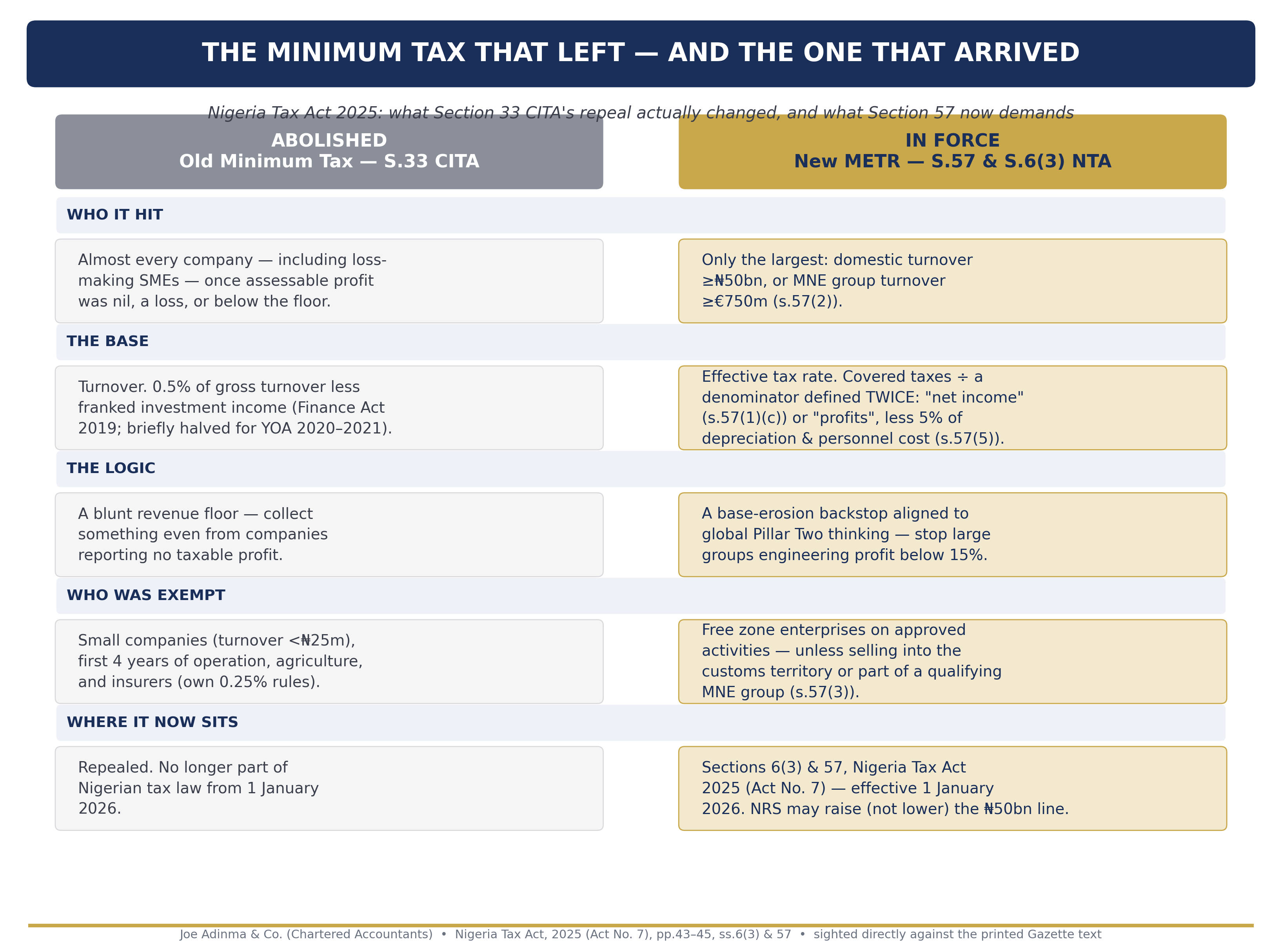
Figure 1: what left the statute book, and what took its place.
Who Is Actually Inside the Net
METR does not apply by sector — it applies by scale and structure, tested through three separate gateways administered by the Nigeria Revenue Service (NRS). A company can be caught by any one of them.
Gateway | Who it catches | Threshold |
Section 57(2)(a) | A Nigerian entity that is a constituent member of a multinational group. | Group's worldwide turnover ≥ €750 million or its equivalent — assessed at global group level, not the Nigerian entity alone. |
Section 57(2)(b) | Any other Nigerian company, whether or not it has a foreign group at all. | Company turnover at or above ₦50,000,000,000 in the financial year. Section 57(4) lets the NRS prescribe a higher threshold by regulation — the Act gives no power to set it lower. |
Section 6(3) | Nigerian parent companies of a non-resident subsidiary, or a non-resident member of a group headed by the Nigerian company, whose tax there yields an ETR below 15%. | No turnover or size threshold is stated in the text itself. Ownership percentage, control, and loss-year mechanics are not spelled out and await NRS implementation rules under s.6(4). |
Two practical points are easy to miss. First, the €750 million group threshold under Section 57(2)(a) is measured at the level of the whole multinational group, worldwide — a modest Nigerian subsidiary or branch of a large global group can be pulled into METR even though its own Nigerian turnover is a fraction of that figure. Second, Section 57(3) carves out free zone enterprises from the additional-tax obligation in subsection (1)(a) specifically, on their approved activities, but only up to a point: the carve-out does not extend to sales made into Nigeria's customs territory, or to a free zone enterprise that is itself part of a qualifying multinational group under subsection (2)(a) — and the Act does not spell out how common costs or mixed approved/non-approved activity should be allocated between the two.
Section 6(3) reads verbatim: “Where the income tax paid by a non-resident company which is a subsidiary of a Nigerian company or a member of a multinational group of a Nigerian company in any year yields less than the minimum effective tax rate prescribed by this Act, the Nigerian parent company shall pay an amount to make that non-resident subsidiary's income tax equal to the minimum effective tax rate.” That is broader than Section 57 in one sense — the text states no turnover or size threshold — but it is also less specified: ownership percentage, control, minority interests, loss-year treatment, foreign-tax creditability, and how a foreign subsidiary's tax is translated into Naira are not addressed in the section itself. Section 6(4) anticipates this gap, requiring the NRS to issue implementation rules for subsections (2) and (3); as of September 2026, we could not locate any such rules on the NRS or Joint Revenue Board's published policy pages. Until they land, treat Section 6(3) as a real but administratively unsettled exposure rather than a fully specified rule.
How the 15% Actually Bites — A Worked Example
The effective tax rate is a function of covered tax and the chosen denominator — not of turnover or margin on their own. Two companies with identical turnover can land on opposite sides of 15% depending on their incentive position, capital allowances, and tax planning; a thin margin does not, by itself, push a company below the floor. Because Section 57 offers two different definitions of that denominator (see “Two Definitions of the Denominator” above), the bridge below runs the same hypothetical entity's numbers both ways, side by side, rather than picking one.
Step (₦ billion) | Net income basis — s.57(1)(c) | Profits basis — s.57(5) |
Audited profit before tax | 6.00 | 6.00 |
Less: franked investment income | (0.40) | n/a to this basis |
Less: unrealised gains | (0.10) | n/a to this basis |
Less: 5% of depreciation (₦1.20) and personnel cost (₦1.00) | n/a to this basis | (0.11) |
Denominator (illustrative) | 5.50 | 5.89 |
Aggregate covered taxes (CIT 0.55 + Dev. Levy 0.12 + credit 0.03) | 0.70 | 0.70 |
Effective tax rate | 12.73% | 11.88% |
Covered tax required at 15% | 0.825 | 0.884 |
Additional tax under Section 57 | 0.125 | 0.184 |
Two things stand out. First, the additional tax payable is not trivially small either way — ₦125 million on the net-income basis, ₦184 million on the profits basis in this illustration — and neither basis is reliably more generous than the other: here, the profits basis produces a lower ETR and a larger top-up, because its 5%-of-cost deduction happens to be smaller than the franked-investment-income and unrealised-gains exclusions under the net-income basis. Which way that comparison runs will differ company to company, depending on the relative size of each business's own exclusions. Second, whichever figure is ultimately owed, it becomes a current-period tax expense and a cash-tax liability payable under whatever filing and payment rules the NRS ultimately prescribes — the Act does not yet specify a separate METR return, form, or payment date, so treat the timing as an open administrative question, not a same-year certainty.
Why This Is Not Simply “Nigeria Adopting Pillar Two”
Section 57 is frequently described as Nigeria's answer to the OECD's Pillar Two global minimum tax framework, and the resemblance — a 15% floor, an effective-tax-rate test, a top-up mechanism — is real. But the resemblance is only partial, and treating the two as interchangeable is a mistake worth guarding against.
The OECD's GloBE rules compute the effective tax rate jurisdictionally, blending all constituent entities in a country together, and they define an Income Inclusion Rule, an Undertaxed Profits Rule, and a Qualified Domestic Minimum Top-up Tax, each with detailed rules for computing “GloBE income,” adjusting covered taxes, and allocating the top-up across constituent, ultimate parent, and intermediate parent entities. Section 57's language, by contrast, appears to test the ETR company by company, using a short, fixed list of adjustments to audited financial-statement profit — not the OECD's GloBE income computation — and it says nothing about an Undertaxed Profits Rule. That distinction matters in practice: picture two Nigerian entities in the same group, Company A with a 20% ETR and Company B with a 10% ETR on comparable-sized profits. Blended jurisdictionally, as the OECD's GloBE rules would do, the group's combined Nigerian ETR sits comfortably above 15% and no top-up arises. Tested company by company, as Section 57's language appears to require, Company B alone falls below the floor and generates additional tax — even though the group's overall Nigerian tax burden is the same either way. Which test actually governs is not a detail; it decides whether a top-up is owed at all.
Whether Nigeria's rule amounts to a Qualified Domestic Minimum Top-up Tax for OECD purposes is not something a commentator can settle by description alone — that status is determined through the OECD's own Inclusive Framework process and recorded in its Central Record of legislation with transitional qualified status. Inclusion on that record is an affirmative grant of transitional qualified status for the listed rule and effective date, not a mere data point; absence, by contrast, is inconclusive — it may simply mean the rule has not yet been submitted for review, not that it has been reviewed and rejected. As of our most recent check in September 2026, Nigeria does not appear on the OECD's published list of jurisdictions with transitional qualified status — a list that, as of the OECD's January 2025 record, included economies such as the UK, Japan, Korea, Canada and Vietnam. South Africa's own Global Minimum Tax Act was not on that January 2025 list either, but South Africa does appear in the OECD's May 2026 list of jurisdictions readying for central GIR (GloBE Information Return) filing — a related but distinct process from Central Record qualification — so African jurisdictions are not necessarily excluded as a category; Nigeria's own rule simply does not yet appear on either list. What can be said with more confidence regardless of that status is that a Nigerian subsidiary of a multinational should not assume its numbers can simply be lifted from the group's existing Pillar Two compliance model — the two computations diverge on their face, and both may need to be run separately: one for the group's global Pillar Two return, and a separate one for Nigeria's Section 57 liability.
The Incentive Question: Pioneer Status and EDTI
The NTA also retires the old Pioneer Status Incentive, which gave qualifying companies a Companies Income Tax exemption for three years, renewable for a further two. Per the Nigerian Investment Promotion Commission's (NIPC) own transition notice, applications closed on 10 November 2025 — an administrative cut-off set by the Commission, not a date fixed in the Act itself. The specific transition treatment sits in Section 183(2), which reads verbatim: “Any company granted an incentive under the Industrial Development (Income Tax Relief) Act shall continue to enjoy the reliefs applicable under the Act for the unexpired period as at the commencement of this Act.” Existing Pioneer Status holders therefore keep their exemption for whatever period remained when the NTA commenced on 1 January 2026 — but the provision is silent on Section 57, so we would not read it as a guaranteed exemption from METR for a company otherwise inside Section 57's net, and would confirm that interaction with NRS guidance rather than assume it.
The successor incentive is the Economic Development Tax Incentive (EDTI), built around a defined cluster of sections in Chapter Eight, Part II of the Act: Section 176 governs publication of the economic development incentive certificate in the Official Gazette; Section 177 creates the economic development tax credit itself; and Section 178 sets the incentive period at five years from the company's production date. The credit (Section 177(1)) accrues at 5% per annum of eligible Qualifying Capital Expenditure acquired within five years of the production date, in a priority sector (agriculture, solid minerals, infrastructure, textiles, business process outsourcing, and others listed in the Tenth Schedule), with the qualifying-expenditure threshold ranging from about ₦200 million to ₦200 billion depending on the sector. Unutilised credit may be carried forward for a further five years after the priority period ends, after which it lapses (Section 177(3)).
The interaction worth modelling |
Any board relying on EDTI as the centrepiece of an investment case in a priority sector should model the after-METR position with real numbers before treating the credit's face value as a certain return on capital. Section 183(1) is also worth noting in the same due-diligence pass: a company granted EDTI cannot benefit from a similar incentive under the NTA or any other law, so EDTI and Pioneer Status are alternatives, not a stack.
The Accounting Question Still Open
For preparers reporting under IFRS, the accounting treatment of the Section 57 top-up is not the settled, one-line conclusion it is sometimes presented as — it is a judgement call that deserves to be documented, not assumed. Our earlier piece on deferred tax under IAS 12 explained the ordinary matching logic behind deferred tax assets and liabilities; the IASB's May 2023 amendments carve out a mandatory exception to that logic, but only for a specifically defined category of legislation. Two separate questions have to be answered in sequence, and it is worth keeping them apart: first, whether the Section 57 top-up is an income tax within IAS 12's scope at all (a label like “additional tax” does not settle this on its own — the analysis looks at the substance of the charge); and only then, second, whether it further qualifies as “Pillar Two legislation” under paragraph 4A specifically. The first is the more straightforward question — a tax computed by reference to profit reads naturally as an income tax under IAS 12 — so the real judgement call sits at the second step.
IAS 12 paragraph 4A defines that second-step scope precisely: the exception applies to “income taxes arising from tax law enacted or substantively enacted to implement the Pillar Two model rules published by the OECD... including tax law that implements qualified domestic minimum top-up taxes described in those rules.” Where that scope test is met, an entity neither recognises nor discloses deferred tax assets or liabilities related to the resulting top-up; it is accounted for as current tax in the period it arises, with separate disclosure of that current tax expense and, before the legislation takes effect, qualitative and quantitative exposure information instead.
Here is the tension our own analysis above creates: we have just argued that Section 57 is a high-level domestic construct inspired by Pillar Two, not legislation built to the OECD's technical specification or confirmed on the OECD's Central Record. If that is right, it raises a genuine question of whether Section 57 was “enacted... to implement” the OECD's Model Rules within the meaning of paragraph 4A, or whether it falls outside that defined scope and back into IAS 12's ordinary deferred tax framework. The IASB itself has not published a bright-line test for this determination, and has separately noted (Basis for Conclusions) that judgement is required even to decide whether a Pillar Two-style top-up is an “income tax” in the first place.
This is not a hypothetical split. TotalEnergies Marketing Nigeria Plc's Q1 2026 financial statements — a real, NGX-filed disclosure, not a commentator's prediction — set out its policy in terms worth quoting directly: “Total amount of tax payable under NTA 2025 is determined based on the higher of two components namely Company Income Tax… and minimum effective tax. Taxes based on profit for the period are treated as income tax in line with IAS 12,” but “Minimum effective tax (15% of adjusted net profit) is outside the scope of IAS 12 and therefore, are not presented as part of income tax expense in the profit or loss.” Where the METR charge exceeds CIT, the company recognises CIT in the income tax expense line and presents the excess “above the income tax line as minimum tax” — a hybrid presentation that treats the additional tax as something other than an income tax altogether, not merely as a current-versus-deferred question. That conclusion — reached by a sophisticated preparer with real resources behind it — is the opposite of the current-tax, within-IAS-12 assumption much commentary defaults to. We do not read one filing as settling the question — but it is proof, not speculation, that Nigerian issuers have not converged on a single answer, and any confident claim that the treatment is settled should be treated with real caution. Preparers should document their own position — the unit of account, why the charge is or is not within IAS 12's scope, and if it is, whether paragraph 4A's exception applies — rather than assume either outcome, agreeing it with their auditor and, where the position is material, informed by Nigerian tax counsel. Where a foreign-subsidiary top-up under Section 6(3) is involved, the consolidation question (whose books recognise the charge, and how any uncertainty is assessed under IFRIC 23) adds a further layer that is likewise entity-specific.
What Regulations Still Need to Settle
Nigeria's METR regime is enacted, but a meaningful part of its administration is not yet public. Treat the following as an open-questions list to revisit as NRS guidance and regulations appear, not as gaps in this article:
Section 6(3) mechanics — ownership/control thresholds, treatment of minority interests, loss years, and how foreign tax paid after year-end or in a different currency is translated and credited.
Whether, and how, a duplicate top-up is relieved where another country's Income Inclusion Rule or Qualified Domestic Minimum Top-up Tax has already taxed the same profit.
The administrative architecture for Section 57 itself — filing form and deadline, the responsible NRS unit, currency translation rules, record-retention requirements, and the dispute procedure for a contested computation.
Free-zone boundary mechanics for a business with both approved and non-approved activity, including transfer pricing and common-cost allocation between the two.
Whether NRS guidance will confirm that Section 57(1)(c)'s “net income” and Section 57(5)'s “profits” are meant to be read as the same computation, or whether one is intended to govern over the other — see “Two Definitions of the Denominator” above.
What This Means for You
Model your ETR now, not at audit time. If your company's turnover is approaching ₦50 billion, or your group's worldwide turnover is near €750 million, compute Section 57(1)(a)'s ratio using current-year numbers before the financial year closes — and run it under both the net-income and profits denominators, given the drafting overlap between (1)(c) and (5).
Assess Section 6(3) as a documented, entity-specific question. If you are a Nigerian parent with any foreign subsidiary, review its home-jurisdiction ETR and record your reasoning, rather than treating exposure as automatic or automatically absent.
Re-underwrite EDTI-based investment cases with the Section 57 top-up included, not assumed away by the credit.
Evidence your Pioneer Status transition position. If you hold an unexhausted approval, document that it predates the 10 November 2025 cut-off, and confirm the Section 57 interaction from official guidance rather than assuming a blanket exemption.
Treat the IAS 12 conclusion as a judgement to document with your auditor, not an assumed default in either direction — Nigerian issuers have already split on this in practice — and address any Section 6(3) consolidation and IFRIC 23 questions at the same time.
Track NRS regulations and the OECD Central Record. Section 57(4) lets the NRS raise the ₦50 billion domestic threshold by regulation (it has no power to lower it), and Nigeria's OECD qualified status can change independently as the Inclusive Framework process runs its course.
The Policy Question Behind the Compliance Question
There is a fair counter-argument to everything above: if Nigeria's version is deliberately simpler and broader than the OECD's GloBE architecture, that divergence may be a feature for source-country revenue, not a drafting failure — a fuller, Inclusive-Framework-qualified regime is more complex to administer and could take years to build. The price of that choice is paid in certainty: a non-qualified or diverging domestic rule raises the odds of double taxation and duplicated top-ups where another country's rules also reach the same profit, and it leaves preparers making judgement calls — like the IAS 12 question above — that a more fully specified regime would have settled by design. Whether that trade-off is right for Nigeria at this stage of building the NRS's technical and administrative capacity is a legitimate policy question, and one worth watching as regulations are issued.
Closing
“Minimum tax has been abolished” is accurate, and it is good news for the SMEs the old rule used to burden. But Section 57 and Section 6(3) are the addition most commentary leaves out of that headline. For the companies and groups large enough to fall inside their net, the work now is not celebrating what left — it is modelling, with documented judgement rather than assumption, what arrived in its place. We help finance teams and boards do exactly that: model Section 57 and Section 6(3) exposure, review EDTI and Pioneer Status transition positions, and agree the IAS 12 treatment with auditors ahead of year-end.
This article is provided for general information and does not constitute tax, audit, or legal advice. Every company's facts differ, and several areas (Section 6(3) mechanics, the Section 57(1)(c)/(5) drafting overlap, and administrative filing rules) await NRS regulations or guidance; please obtain specific advice, and confirm current statutory text, before acting on any point above.
Sources
ǼLEX Legal — “Nigeria's 15% Minimum Effective Tax Rate (METR)”
oecdpillars.com — “Nigeria Enacts High-Level GloBE Minimum Tax Rules”
BusinessDay — “Nigeria's 15% effective tax rate reshapes investment landscape”
BusinessDay — “The new economic development tax incentive under the Nigeria Tax Act 2025”
Companies Income Tax Act, Cap. C21, Laws of the Federation of Nigeria — Sections 16 (Insurance companies) and 33 (Payment of minimum tax), sighted directly in full (pre-2019 text; structural basis for the insurer income-base-versus-rate distinction above)
Finance Act, 2019 (Act No. 1), Federal Republic of Nigeria Official Gazette, gazetted 14 January 2020 — clauses amending CITA Sections 16 and 33, sighted directly in full (original 0.5% rate inserted into both provisions, no temporary relief yet)
Finance Act, 2020 — clauses amending CITA Sections 16 and 33, sighted directly in full (identical temporary 0.25% reduction added to both provisions, for years of assessment due 1 January 2020 to 31 December 2021)
Mondaq / Olisa Agbakoba Legal — “4 Top Nigerian Tax Compliance Considerations for Boards in 2026”
EY — “Amendments to IAS 12: International Tax Reform — Pillar Two Model Rules”
OECD — Central Record of legislation with transitional qualified status (Pillar Two)
Premium Times — “How FG allegedly altered tax reform laws passed by National Assembly — Reps panel”