
IFRS 18 Starts in 2027. Why Nigerian Companies Need to Act in 2026
IFRS 18 starts in 2027, but Nigerian companies need 2026 data ready now. See what CFOs should review across reporting, systems and controls.
Read more →Regulatory updates, tax guidance, and IFRS perspectives for Nigerian finance leaders.
IFRS 18 starts in 2027, but Nigerian companies need 2026 data ready now. See what CFOs should review across reporting, systems and controls.
Read more →

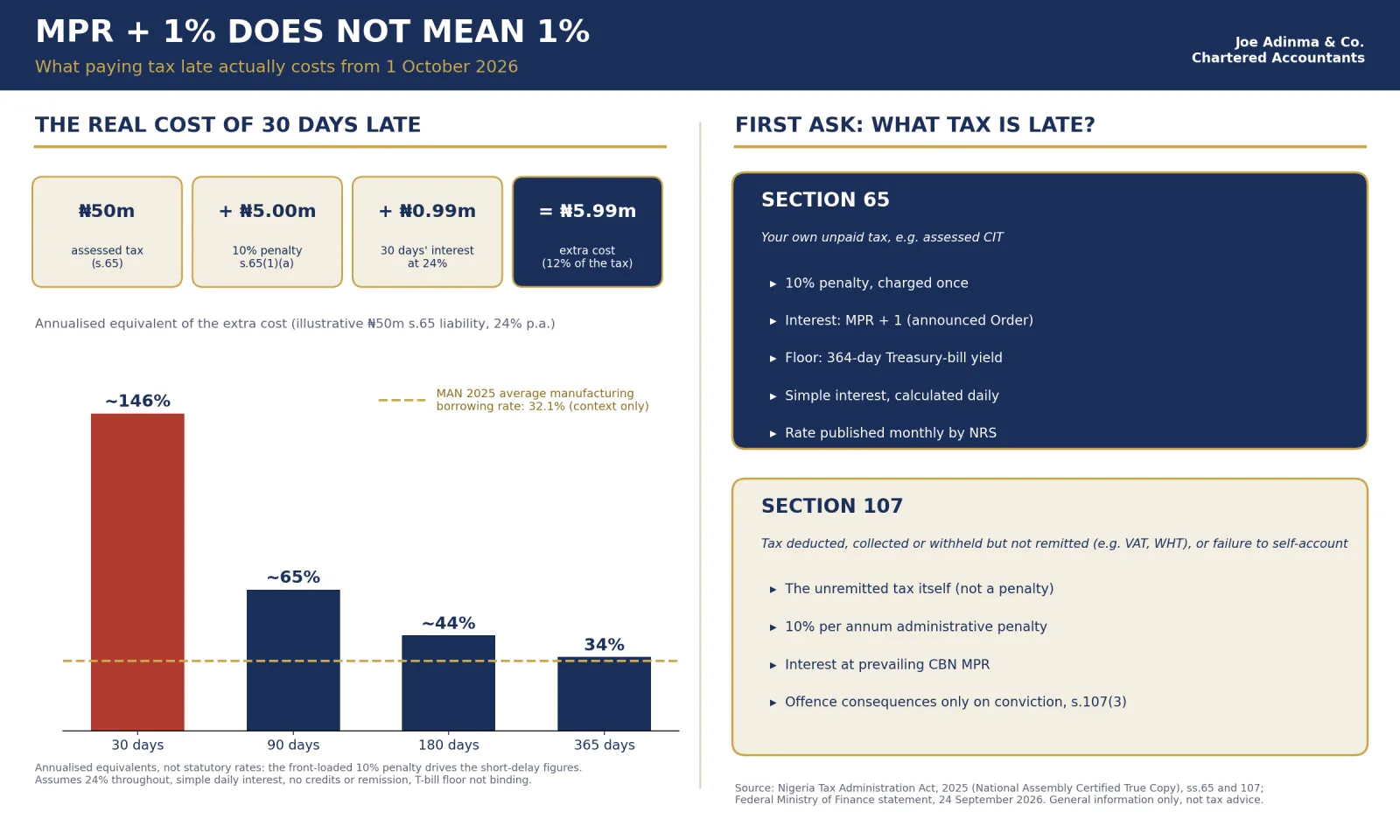
Nigeria has cut interest on late tax to MPR + 1%, but the 10% penalty remains—and VAT and WHT follow different rules under the NTAA.
Read more →
When Rev360 failed on the 30 June CIT deadline, readiness was not enough. Nigerian businesses now need contemporaneous evidence of attempted filing to support any penalty remission request.
Read more →
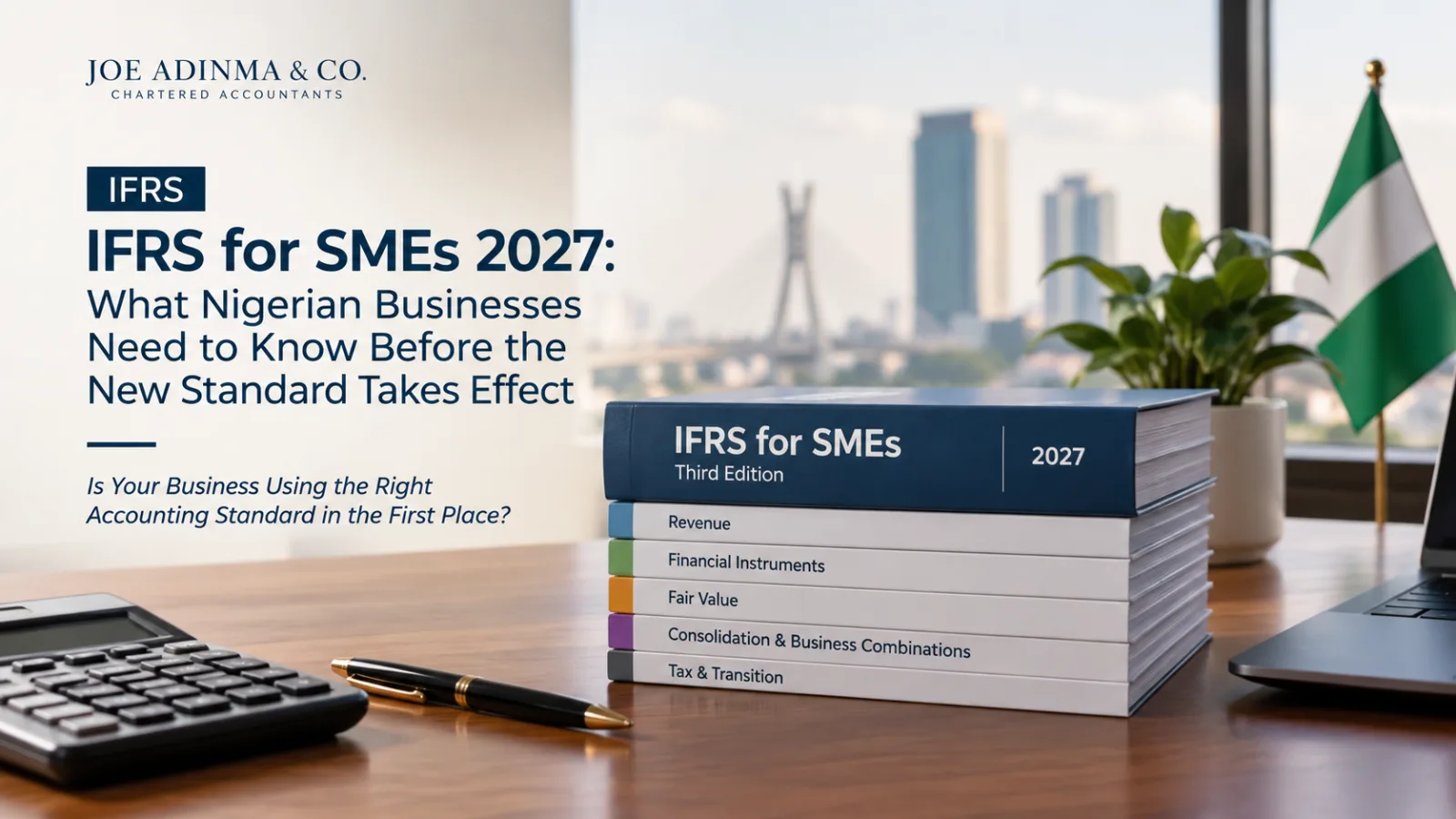
IFRS for SMEs changes in 2027. Nigerian businesses must first confirm the right reporting framework, then prepare for changes in revenue, finance and disclosures.
Read more →
Before borrowing at 30%+, Nigerian businesses should find out how much cash is trapped in receivables, inventory and inefficient working-capital cycles.
Read more →
Nigeria’s $50bn deep offshore incentive is not a $50bn tax giveaway. See who qualifies, how the credit works and what a project may actually realise.
Read more →
Nigeria’s old minimum tax is gone, but a 15% Minimum Effective Tax Rate now applies to certain large companies. Here’s who is affected and how it works.
Read more →
The IFRS for SMEs Standard changes in 2027. Here’s what Nigerian businesses need to know about eligibility, key amendments and transition readiness.
Read more →
At borrowing costs above 30%, taking a loan requires more than repayment capacity. Learn how Nigerian businesses can test returns, cash flow and risk before borrowing.
Read more →We use essential cookies for security and session management, and store your theme preference locally. See our Privacy Policy for details.